In middle school, I followed the same routine every day. I would come home, drop my backpack, grab a snack, and sit down in front of my gaming laptop to play Roblox, a gaming site that has various genres of video games. I would always start with a game called “Greenville”–a car driving-based video game–and when I started my gaming session at 3 p.m, I would tell myself that I would stop after an hour. But that never happened. Before I knew it, I clocked in around four to five hours, it was sunset, dinner was ready, and I hadn’t started my homework yet.
At the dinner table, my mom would warn me, “Hazim, if you keep playing games, it’ll numb your brain.”
I knew my Mom had a point, but gaming was the best part of my day. It allowed me to relax and gave me something to look forward to after school, and, like my friends, I would play whenever I had the chance.
At first, my gaming for so long didn’t seem like a serious problem, but then my mom started noticing I was moody and easily distracted. When she pointed that out to me, I realized she was right: I was addicted.
Video game addiction is when you breach through a firewall of safety which leads to a spiral of obsession. Gaming starts to take over your life.
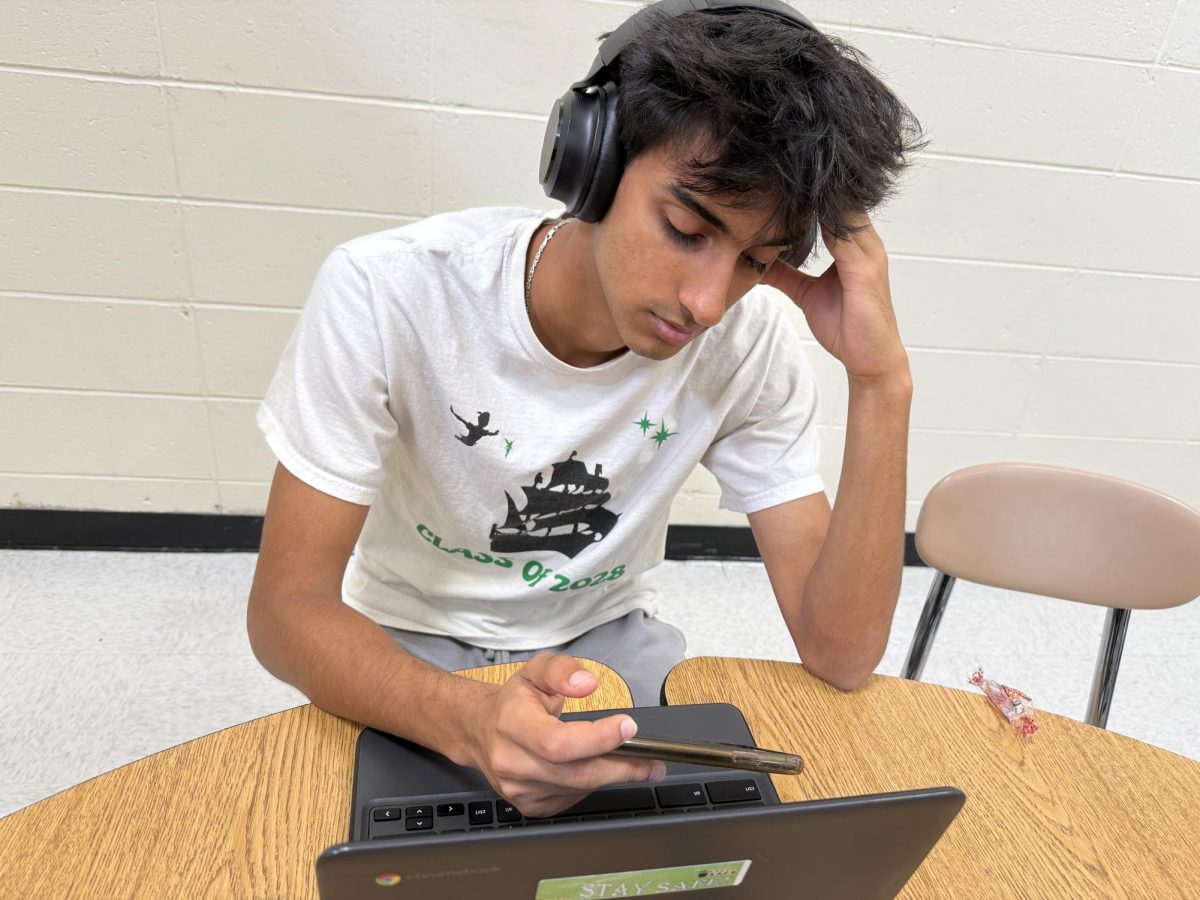
I saw this in my friends, too. Some played video games during class, hiding behind their screens, appearing to be paying attention and typing notes, but weren’t. I remember in eighth grade, my social studies teacher was giving a lesson, and my classmate was playing a video game. He was so addicted and locked in to his Chromebook, he lost all interest in the lesson. The teacher found him out, and my classmates and I laughed about it, but I also realized we couldn’t resist the temptation of playing games even when we were supposed to be learning. The time spent on gaming eventually brings down academic performance.
Gaming also messes up your sleep. According to researchers Sara Peracchia and Giuseppe Curcio in an article published on the NIH website, overstimulating sounds can cause the brain to stay alert longer, making it harder to reach deep, restful sleep. These bright lights also confuse the body’s natural sleep rhythm, which can lead to feeling tired, unfocused, and irritable the next day. Because I stayed up so late, it was hard to focus in school. I would experience a drop in my energy by the middle of the day.
But what would teenager culture be without playing video games? Adhiraj Dasgupta (‘27) said video games are “just a way for people to enjoy themselves and pass time.”
Dasgupta was right and so was my Mom. I realized that I can listen to my Mom’s concern and still be a teenager and listen to Dasgupta: I had to stop my addiction.
In the middle of the summer before eighth grade, with high school around the corner, I understood my problem. I started to make a plan to moderate my gaming times to 20-30 minutes a day. After the first two months of eighth grade, I realized moderating a gaming addiction was hard. I kept thinking of video games, but I stuck to my plan.
Not playing video games freed time to spend with my family. My Mom immediately noticed how I had changed after I moderated my time. At the dinner table she turned to me and said “Good job!”. This really encouraged me to stop my addiction.
My experience isn’t the only example of how limits can help. Other teens also show that controlling game time can make life more balanced.
In high school, Dasgupta said, “I probably play games for three to four hours mainly on the weekend.” Even with this amount of video game time, he still has time for his after school club Civic Leaders of America, working out five hours a week at the gym, and tutoring kids in English. Setting limits on gaming helps Dasgupta balance having fun with other activities in his life.
“Anything in excess is detrimental,” Dasgupta added.
But games can also enhance learning. Mr. Levinson, a social studies teacher, incorporates games like Kahoot, a game-based learning platform, into his lessons to engage students’ historical knowledge.
“A well-thought-out project that incorporates the video game, I think could work out really well,” said Mr. Levinson. Much like Dasgupta, Mr. Levinson believes in a moderated time for video games, sticking to 15 to 20 minute gaming sessions for him and his elementary-aged son.
Putting all these viewpoints together leads to one important takeaway.
Video games are not bad. What really matters is knowing when to stop so you can live a well-balanced life as a teenager. Setting limits helps you enjoy gaming without letting it hurt your schoolwork, relationships, or health.