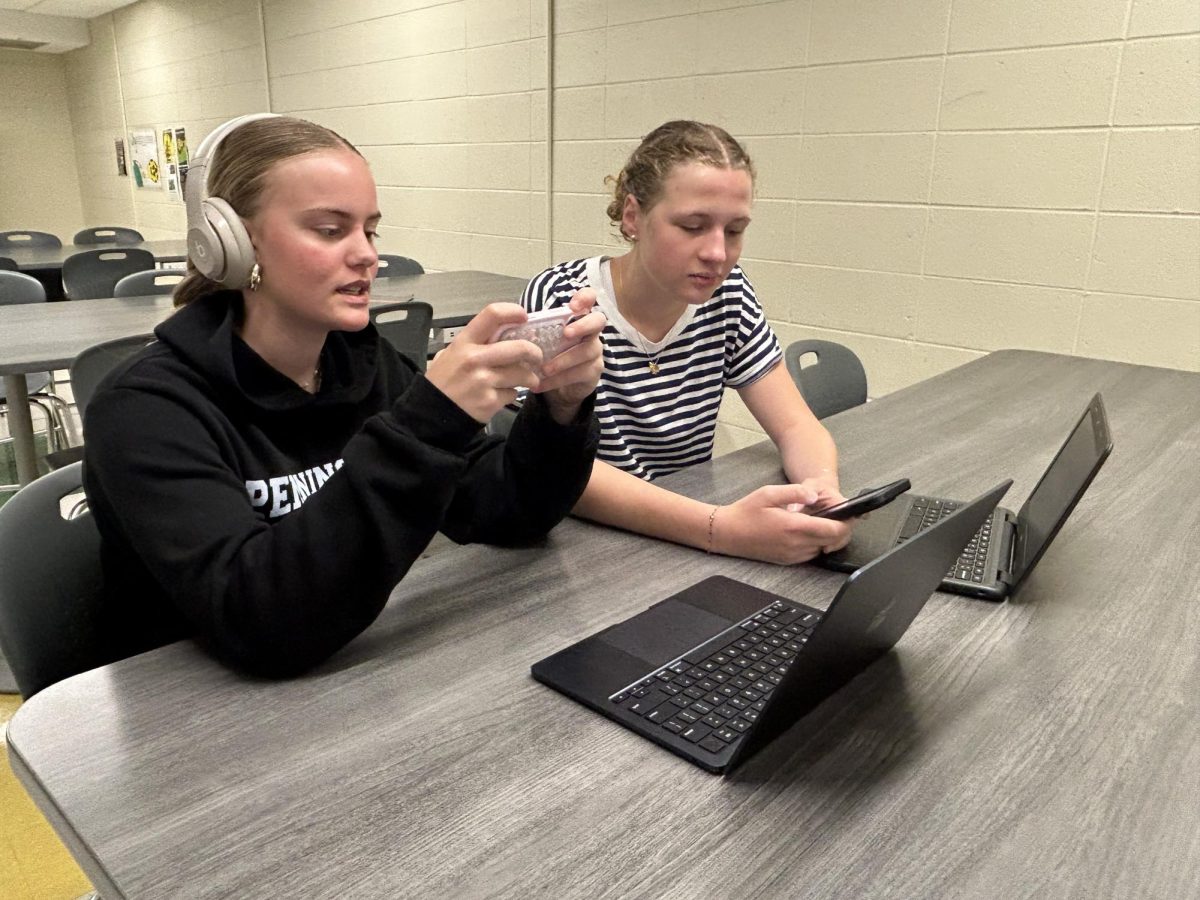
As you enter Room 95, a few students are chatting – but most are on their phone doing the usual quick check, some are speed replying to messages, a handful are finishing an intense match of Clash Royale before the second bell rings.
This taken-for-granted scene in classrooms will no longer be commonplace at South starting in the 2026–27 school year when students across New Jersey will have to keep their phones off and out of sight. Former governor Philip D. Murphy signed Bill S3695 on Jan. 8, 2026 which officially restricts students from using their cellphones, or any other personal-internet devices, during the school day, according to the New Jersey Department of Legislature online. Personal-internet devices include such digital devices as personal computers, smartphones, tablets, smartwatches, smart glasses, according to guidelines by the New Jersey Department of Education.
The cellphone ban is a response to the harmful effects of cellphone use among young people. More kids are getting phones at a young age, according to a Dec. 1, 2025 New York Times article by Catherine Pearson. One study showed that when given a phone by the age of 12, children experience a negative impact on their overall wellbeing, such as a lack of socialization and decreased sleep and exercise.
Sanjana Raj Shetty (‘27), treasurer of the junior student council, said, “People are kind of over-dependent on their phone, so they’re replacing real social interactions and it’s not allowing for proper development in our crucial years.In that sense, I think it will be beneficial for the younger generation.”
Ms. Jessica Cincotta, Assistant Superintendent of Pupil Services and Planning, said, “A lot of hurtful things are said through social media.”
In the U.S., at least 37 states have enacted some form of restriction on personal device use in school, according to Education Week online. This ban is happening across the globe, from a small Irish town named Greystones to the entire country of South Korea, banning the use of cellphones in classrooms last year, according to recent articles in the New York Times.
At WWP, Ms. Jessica Cincotta, Assistant Superintendent of Pupil Services and Planning, said the district is still developing how the policy will look in practice.
The biggest shift may occur during less structured parts of the day. Ms. Cincotta said that the cell phone ban “will change what lunch, substudy, and study hall look like.” Based on observations from other schools that have implemented similar restrictions, Ms. Cincotta said the changes will reshape student socialization: students will interact more face-to-face rather than with a screen between them.
Implementation of the bill aims to reduce distractions in classrooms. For many teachers and administrators, the ban is a positive step toward improving the school experience and increasing student focus.
Principal Ms. Valerie Rodriguez said, “I do think that the cell phone ban can increase engagement in classrooms and get rid of distractions.”
Many teachers already practice a no cellphone policy in their classroom. English teacher Ms. Ellin Glassband tells students to put their phones away at the start of class. “When I’m ready to get started, I say, ‘Everyone, phones in the bag.’ There’s never pushback, no one refuses to do so. They put their phones away, and we get to work,” she said. “I only get an hour a day with these kids, and there’s a lot I want to do with them. Our time is special and valuable, and we don’t have time for those distractions.”
Spanish teacher Ms. Jennifer Kelley believes that the phone ban is a double-edged sword. “I’ve witnessed a lot of students who haven’t had good experiences at school. I think we can attribute it to the access to social media and all kinds of things that have to do with your phone. So not having access during a specific period of time would be really good.”
But as a district parent, she said, “I find it convenient to be able to text my child during the school day. But I also have an older child before phones were actually a thing in school. There were ways to get in touch with my child that were just not as convenient.”
Students remain divided on the restrictions the ban creates.
John Maliekal (‘28), president of the sophomore class council, supports the intention of the policy but recognizes the challenges it could bring to daily life.
“It would have a positive impact. In a lot of the cases, when people have free time to communicate with others, they’re choosing to spend time on their phone and not be social. Having the phone ban is a good way to force others to connect with each other,” said Maliekal. “But it’s a really efficient means of communication. I can communicate with my parents for pickup from sports practice. It’s going to be hard to adjust to not having that fast communication.”
Student concerns are not limited to just communication with their parents. “It’s important if I have to coordinate meetings for homework or classwork with my friends,” said Shetty. “I also listen to music while studying because it’s so loud sometimes, even in the media center.”
Some students face inconveniences without their phones due to their medical conditions. Siddharth Khurana (‘28), senior opinion editor of The Pirate’s Eye, described the difficulties he would face as someone diagnosed with diabetes. “I constantly need to keep my phone on me and check my blood sugar every 5-10 minutes.”
The administration’s goal is to balance implementation of the state cellphone ban and easing students into the change. Ms. Cincotta said, “We’re always thinking of our students, first and foremost.”